Turkish and Greek baklava are close relatives. Both are layered pastries with nuts and syrup, and both grew up in the Ottoman world. The differences are in the details: the nuts, the syrup, the spices, the thickness of the layers and how sweet the finished piece feels.
Note that both countries have many regional styles, so these are general tendencies, not rules. For the shared history, see where baklava comes from.
In short
- Turkish and Greek baklava share an Ottoman-era history and the same basic structure.
- Turkish baklava typically uses pistachio or walnut, a sugar syrup and no spices.
- Greek baklava typically uses walnut (often with almond), cinnamon or cloves, and a syrup with honey.
- Both are authentic traditions; regional recipes vary in both countries.
At a glance
| Turkish baklava (typical) | Greek baklava (typical) | |
|---|---|---|
| Main nuts | Pistachio or walnut; also hazelnut and almond | Walnut, often with almond |
| Syrup | Sugar syrup, often with lemon | Frequently includes honey |
| Spices | Usually none — the nut is the star | Often cinnamon and cloves |
| Layers | Very thin, numerous layers | Commercial phyllo; layering varies |
| Fat | Clarified butter | Butter, sometimes oil |
| Shapes | Slices, diamonds and many specialty shapes | Mostly diamonds or rolls |
Shared culinary history
Both traditions developed within the Ottoman Empire, where cooks of many backgrounds worked side by side. Recipes travelled, and each community adapted them. That shared past is why the two are so similar — and why both have a genuine claim to baklava.
Common ingredients
Both use thin wheat dough, butter or fat, chopped nuts and a sweet syrup. The proportions and the choice of each ingredient create the differences.
Nuts used in different regions
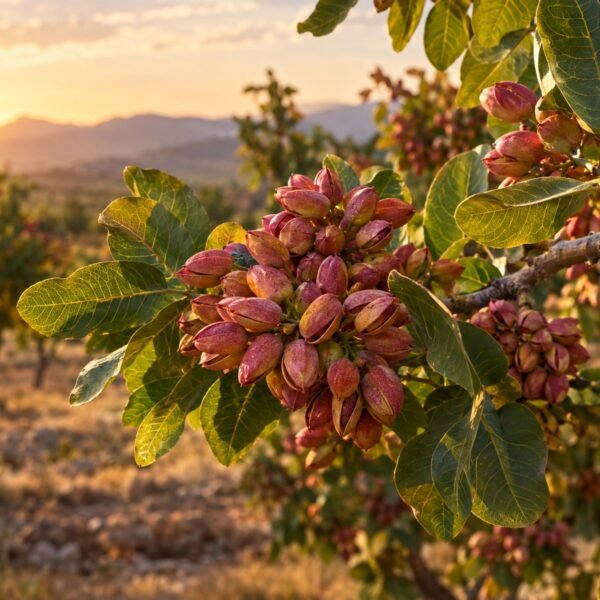
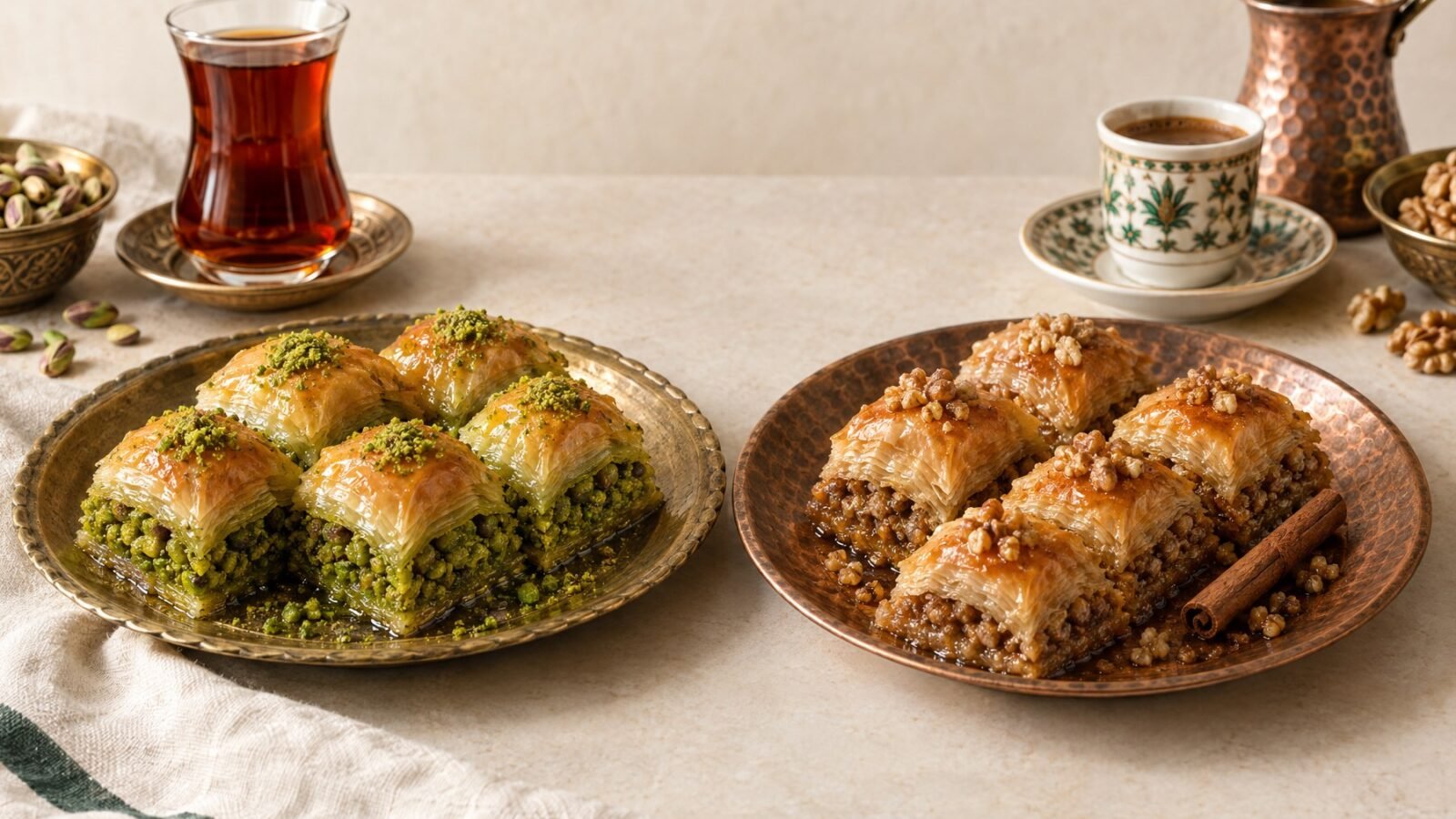
Turkish baklava is closely associated with pistachio, especially in the Gaziantep style, and with walnut in Anatolian home cooking. Greek baklava most often uses walnuts, sometimes mixed with almonds.
Syrup variations
Turkish baklava is usually finished with a sugar-and-water syrup, often with a squeeze of lemon, which keeps the flavour clean and lets the nuts lead. Greek baklava frequently uses honey in the syrup, giving a deeper, floral sweetness and a slightly stickier texture.
Spices and flavour
Greek recipes commonly add cinnamon and sometimes cloves to the nut filling. Turkish baklava rarely uses spices; the aim is the pure flavour of butter and nut.
Preparation methods
Turkish masters, especially in Gaziantep, are known for rolling very thin dough by hand and using many layers with clarified butter. Many Greek home cooks use ready-made phyllo. Both can produce excellent baklava; the hand-rolled style tends to give a lighter, crisper result.
Serving traditions
In Türkiye, baklava is served with Turkish coffee or tea, and sometimes with kaymak (clotted cream) or ice cream. In Greece, it is equally a dessert for celebrations and is often served with Greek coffee.
Cultural significance
In both countries baklava marks special occasions: religious holidays, weddings, name days and family gatherings. It is a dessert of hospitality wherever it is made.
How to tell them apart when tasting
- Look at the filling: bright green pistachio points to the Turkish style; walnut alone could be either.
- Smell for spice: cinnamon or clove suggests a Greek recipe.
- Taste the syrup: a floral, honeyed sweetness is typical of Greek baklava; a clean sugar syrup with a hint of lemon is typical of Turkish baklava.
- Check the layers: very thin, numerous layers are a hallmark of Gaziantep-style Turkish baklava.
Related desserts in other cuisines
Levantine baklawa is often scented with rosewater or orange blossom water and may use pistachio or cashew, while many Balkan versions favour walnut. Each cuisine adapted the same idea of thin pastry, nuts and syrup to its own ingredients.
Frequently asked questions
Which is sweeter, Turkish or Greek baklava?
It depends on the maker, but honey syrups and spices can make Greek baklava taste richer, while Turkish baklava often tastes cleaner and more nut-forward.
Does Turkish baklava use honey?
Usually not; most Turkish baklava uses a sugar syrup. Some regional or modern versions use honey.
Is one more authentic than the other?
No. They are two authentic traditions with a shared history.
Taste the Turkish style: pistachio baklava and walnut baklava.