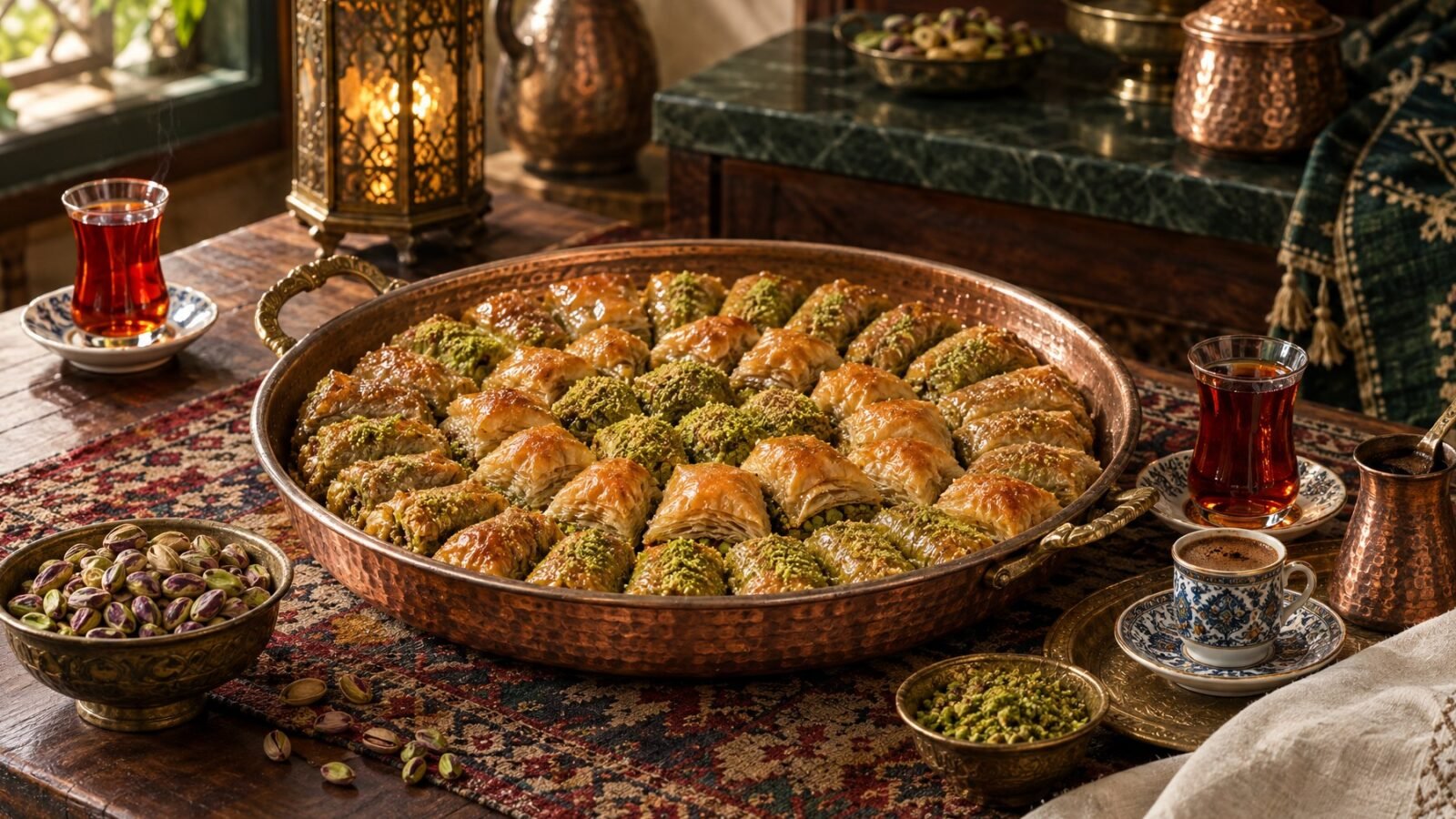
Short answer: the baklava we know today took shape in the kitchens of Ottoman Istanbul, drawing on much older traditions of layered breads and nut-and-honey pastries. Turkish, Greek, Armenian, Levantine and Balkan cooks all developed their own versions, and the exact origin is still debated by food historians.
In short
- The modern, many-layered baklava took shape in the palace kitchens of Ottoman Istanbul.
- It draws on older traditions of layered breads and nut-and-honey pastries; its exact origin is debated.
- Turkish, Greek, Levantine, Armenian and Balkan cooks all have genuine baklava traditions.
- Gaziantep baklava became the first Turkish product with EU Protected Geographical Indication status, in December 2013.
A history of layered pastries
Layering thin sheets of dough is an old technique. Food historians have traced related practices to the layered breads of Turkic peoples in Central Asia, and others point to pastries of the Byzantine and wider eastern Mediterranean world. Sweet combinations of nuts, honey and dough were common across the region long before baklava had its name.
Because written recipes from these early periods are rare, the line between “ancestor” and “baklava” is blurry. That is one reason the origin story is contested.
Ottoman culinary traditions
Most historians agree that the palace kitchens of Topkapı in Istanbul played a central role in refining baklava into the many-layered dessert we know. The Ottoman court employed large numbers of specialist cooks and pastry makers, and techniques for rolling very thin dough became a mark of skill.
One well-documented custom is the Baklava Alayı, or Baklava Procession. On the 15th day of Ramadan, trays of baklava were prepared in the palace kitchens and given to the Janissary regiments, who carried them back to their barracks in a ceremonial march. The custom ended with the abolition of the Janissary corps in 1826.
How Turkish baklava developed
After the palace, baklava spread through Ottoman cities and towns. Regions adapted it to local ingredients: pistachio in the southeast, walnut across Anatolia, hazelnut near the Black Sea, and fresh cheese in the Aegean. Pastry makers created new shapes, from the folded Şöbiyet to the rolled Burma.
Greek baklava traditions
Greece has its own long baklava tradition, shaped by centuries within the Ottoman world and by local tastes. Greek baklava often uses walnuts, sometimes mixed with almonds, spices such as cinnamon and cloves, and a syrup that frequently includes honey. It is a genuine tradition in its own right. See Turkish vs Greek baklava for the differences.
Why Gaziantep matters
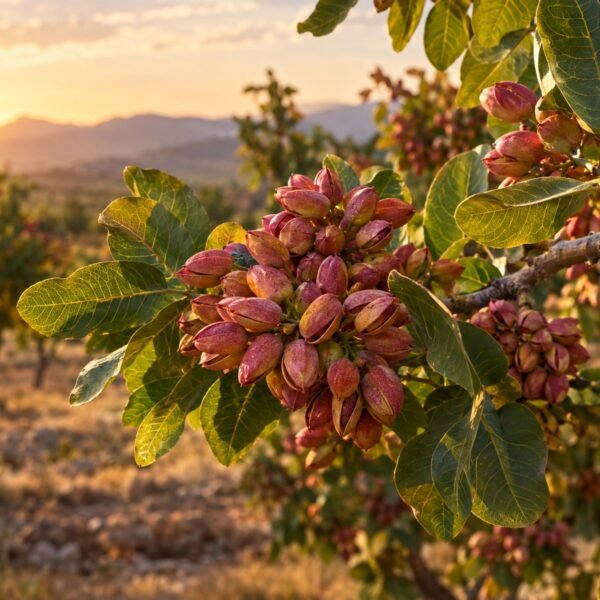
In the 19th and 20th centuries, the southeastern city of Gaziantep became famous for its baklava, using the pistachios grown in the region and very thin, butter-rich dough. In December 2013, “Antep Baklavası / Gaziantep Baklavası” was registered by the European Union as a Protected Geographical Indication — the first Turkish product to receive that status. Read more in what makes Gaziantep baklava special.
Timeline of key moments
| When | What happened |
|---|---|
| Before the Ottoman era | Layered breads and nut-and-honey pastries appear across Central Asia and the eastern Mediterranean. |
| Ottoman period | Palace kitchens at Topkapı in Istanbul refine thin, many-layered baklava. |
| Late 17th–early 18th century onward | The Baklava Procession (Baklava Alayı): trays of baklava are given to the Janissaries on the 15th day of Ramadan. |
| 1826 | The Janissary corps is abolished and the procession ends. |
| Modern era | Gaziantep becomes the city most associated with pistachio baklava. |
| December 2013 | “Antep Baklavası / Gaziantep Baklavası” is registered as an EU Protected Geographical Indication. |
Regional variations
Today you will find baklava from Bosnia to Iran, each with its own character: rosewater or orange blossom in some Levantine versions, cardamom in others, honey in Greek kitchens, pistachio in Gaziantep. None is more “authentic” than the others — they are different branches of the same family.
Why several cultures claim baklava
Baklava developed across a large, multicultural empire, where cooks, ingredients and recipes moved between cities. When national cuisines were defined in the 19th and 20th centuries, many countries rightly saw baklava as part of their own heritage. The honest answer is that it belongs to many traditions at once.
At Baklava House, we celebrate the Turkish tradition — Ottoman palace refinement, Gaziantep craftsmanship and Anatolian hospitality — without claiming that one culture invented every form of baklava.
Modern international popularity
Migration has carried baklava around the world, and it is now found in bakeries and shops from Toronto to Sydney. Interest in regional styles has grown too, which is why specialties such as Şöbiyet and Fıstık Sarma are increasingly sought after outside Türkiye.
Frequently asked questions
Is baklava Turkish?
The modern, many-layered baklava is strongly associated with Ottoman Istanbul and Turkish pastry making, and Gaziantep baklava has protected status in the EU. Other cultures have their own long traditions too.
Is baklava Greek?
Greece has a long and distinct baklava tradition. The dessert developed across the Ottoman world, which included Greek communities.
Where does the word “baklava” come from?
The origin of the word is uncertain. Several scholars connect it to Turkic or Mongolian roots, but there is no consensus.
What was the Baklava Procession?
A Ramadan custom in Ottoman Istanbul in which the palace gave trays of baklava to the Janissary regiments on the 15th day of the month.
Explore the tradition yourself: shop traditional baklava or read our heritage.
Sources
- SBS Food — Biting into baklava’s sweet, yet controversial history
- Daily Sabah — Ceremonial desserts of Turkish cuisine (the Baklava Procession)
- Hürriyet Daily News — The Ottoman sweet tooth
- European Commission — Implementing Regulation (EU) No 1399/2013 registering “Antep Baklavası / Gaziantep Baklavası” (PGI)
- FoodNavigator — Turkish baklava gains EU protected status (2013)